Ecuador Has a Working Holiday Visa -- And Almost Nobody Knows
When people think "working holiday visa," they think Australia, New Zealand, maybe Canada or Ireland. They picture gap-year backpackers picking fruit in Queensland or bartending in Queenstown. Ecuador doesn't come up in that conversation. But it should.
Ecuador has bilateral working holiday agreements with three countries -- Australia, France, and Hungary -- that allow citizens aged 18-30 to live and work in Ecuador for up to 12 months. The visa is non-renewable, meaning you get one shot at it. But for a year of living in one of South America's most affordable, geographically diverse, and culturally rich countries -- with the legal right to work -- it's an opportunity that deserves more attention than it gets.
I run an immigration services company in Cuenca, and I've seen exactly two people apply for this visa in the past year. Not because it's impractical, but because nobody knows it exists. There's virtually no English-language information about it online. This guide aims to fix that.
Legal Basis
Ecuador's Working Holiday Visa (Visa de Vacaciones y Trabajo) is established through bilateral agreements between Ecuador and each participating country:
- Australia: Bilateral Working Holiday agreement signed between the governments of Ecuador and Australia
- France: Bilateral Working Holiday agreement between Ecuador and France (Programme Vacances-Travail)
- Hungary: Bilateral Working Holiday agreement between Ecuador and Hungary
These agreements are implemented domestically through Ecuador's immigration framework under the LOMH (Ley Organica de Movilidad Humana), which provides for visa categories established by international agreements.
Each bilateral agreement sets the specific terms -- age limits, duration, quotas, and conditions -- which may vary slightly between countries. The core structure is consistent: one year, non-renewable, with the right to work.
Who Qualifies
You must meet ALL of the following criteria:
- Citizenship: You must be a citizen of Australia, France, or Hungary
- Age: You must be between 18 and 30 years old (inclusive) at the time of application. Some agreements specify "not yet turned 31," so apply before your 31st birthday
- First-time applicant: You must not have previously held an Ecuador Working Holiday Visa (it's a once-in-a-lifetime visa)
- No dependents: You must apply as an individual -- you cannot bring dependent family members on this visa
- Return ticket or funds for one: You must demonstrate the ability to leave Ecuador at the end of your stay
- Health insurance: You must have valid health insurance that covers your entire stay in Ecuador
- Proof of funds: You must demonstrate sufficient financial means to support yourself during the initial period (typically $2,500-5,000 depending on the agreement)
- Clean criminal record: No serious criminal convictions
- Health requirements: Meet basic health requirements (may include medical certificate)
Important Restrictions
- Non-renewable: You cannot extend or renew the Working Holiday Visa. When your 12 months are up, you leave Ecuador or transition to a different visa type if you qualify.
- No dependents: Your spouse, partner, or children cannot join you on this visa. They would need to apply independently (if they're eligible) or use a different visa category.
- Work limitations: While you can work, some agreements restrict you from working for the same employer for more than 3-6 months of the 12-month period. This encourages the "holiday" component -- the intent is that you travel and work, not simply relocate for a year-long job.
- Apply from outside Ecuador: You must apply at an Ecuadorian consulate in your home country (or country of residence) before traveling to Ecuador. You cannot convert a tourist stay into a Working Holiday Visa from within Ecuador.
Requirements by Country
While the core requirements are similar, each bilateral agreement has specific provisions:
Australia
| Requirement | Details |
|---|---|
| Age | 18-30 (inclusive) |
| Duration | 12 months |
| Annual quota | Limited (check with embassy for current allocation) |
| Proof of funds | Approximately AUD $5,000 |
| Health insurance | Required for full duration |
| Application location | Ecuadorian Embassy/Consulate in Australia |
France
| Requirement | Details |
|---|---|
| Age | 18-30 (inclusive) |
| Duration | 12 months |
| Annual quota | Limited |
| Proof of funds | Approximately EUR 2,500-3,000 |
| Health insurance | Required for full duration |
| Application location | Ecuadorian Embassy/Consulate in France |
Hungary
| Requirement | Details |
|---|---|
| Age | 18-30 (inclusive) |
| Duration | 12 months |
| Annual quota | Limited |
| Proof of funds | Approximately EUR 2,500-3,000 |
| Health insurance | Required for full duration |
| Application location | Ecuadorian Embassy/Consulate in Hungary |
Cost
The visa fees vary by bilateral agreement but are generally in the range of $50-100 for the application. Some agreements specify reciprocal fees (Ecuador charges what the partner country charges Ecuadorians for the equivalent visa in reverse).
Additional costs to budget:
- Health insurance for 12 months: $600-1,200 (international travel insurance with work coverage)
- Flight to Ecuador: $800-1,500 from Australia, $600-1,000 from Europe
- Proof of funds: $2,500-5,000 in accessible savings
- Document preparation: $50-150 (background check, translations, etc.)
The visa itself is cheap. Getting to Ecuador and having the required savings to show is where the real cost lies.
What Kind of Work Can You Do?
The Working Holiday Visa grants you the legal right to work in Ecuador, with some limitations designed to ensure the visa retains its "holiday" character:
Common Jobs for WHV Holders in Ecuador
Hospitality and Tourism:
- Hostel reception and management (Ecuador's backpacker circuit is well-developed)
- Tour guide assistant (particularly valuable if you speak English, French, or German)
- Restaurant and bar work in tourist areas (Banos, Montanita, Canoa, Mindo, Cuenca's historic center)
- Surf instruction on the coast (Montanita, Canoa, Mompiche)
English Teaching:
- Private English tutoring ($10-20/hour in Cuenca and Quito)
- Language school positions (TEFL certification helpful but not always required)
- Conversation practice partnerships with Ecuadorian professionals
Agriculture and Volunteering:
- Cacao farm work on the coast
- Organic farm stays in the highlands and cloud forest
- Coffee plantation work in Loja Province and Intag Valley
Digital and Remote Work:
- Freelancing in your field while based in Ecuador (web development, design, writing, marketing)
- Remote work for your home country employer (check your agreement's provisions on this)
Adventure and Outdoor:
- Climbing guide assistant (Cotopaxi, Chimborazo)
- White-water rafting guide (Tena, Banos)
- Dive shop work in the Galapagos feeder cities
What You Probably Won't Do
- Professional positions requiring Ecuadorian licensing (medicine, law, engineering) -- these require credential recognition and professional registration
- Government jobs -- restricted to Ecuadorian citizens
- Long-term corporate positions -- the 3-6 month same-employer limitation in most agreements makes this impractical
Wages in Ecuador
Ecuador uses the US dollar, and the minimum wage (SBU) in 2026 is $482/month. Most entry-level and hospitality jobs pay near minimum wage. English teaching typically pays $500-800/month for part-time work, more for full-time positions at established schools.
This is not a visa you use to save money. Ecuadorian wages are low by Australian, French, or Hungarian standards. You work to offset your living costs while experiencing the country, not to build savings. The financial math works because Ecuador's cost of living is exceptionally low.
Why Ecuador Is an Underrated WHV Destination
If you're 23 and Australian, you have working holiday options in dozens of countries. Why Ecuador?
The Cost Argument
Ecuador is dramatically cheaper than virtually every other WHV destination. Australia's minimum wage is over AUD $23/hour but a shared room in Sydney costs $250/week. In Ecuador, you earn less in absolute terms but your money goes vastly further:
| Expense | Ecuador | Australia | France |
|---|---|---|---|
| Room (shared apartment) | $150-300/mo | $800-1,200/mo | $600-900/mo |
| Meal (local restaurant) | $2.50-4 | $15-25 | $12-18 |
| Beer | $1.50-3 | $8-12 | $5-8 |
| Monthly transport | $15-30 | $150-200 | $75-150 |
| Total monthly living | $600-900 | $2,000-3,000 | $1,200-2,000 |
A working holiday in Ecuador at $600-900/month is accessible to almost anyone with modest savings. A working holiday in Sydney at $2,500/month requires significantly more financial runway.
The Geography Argument
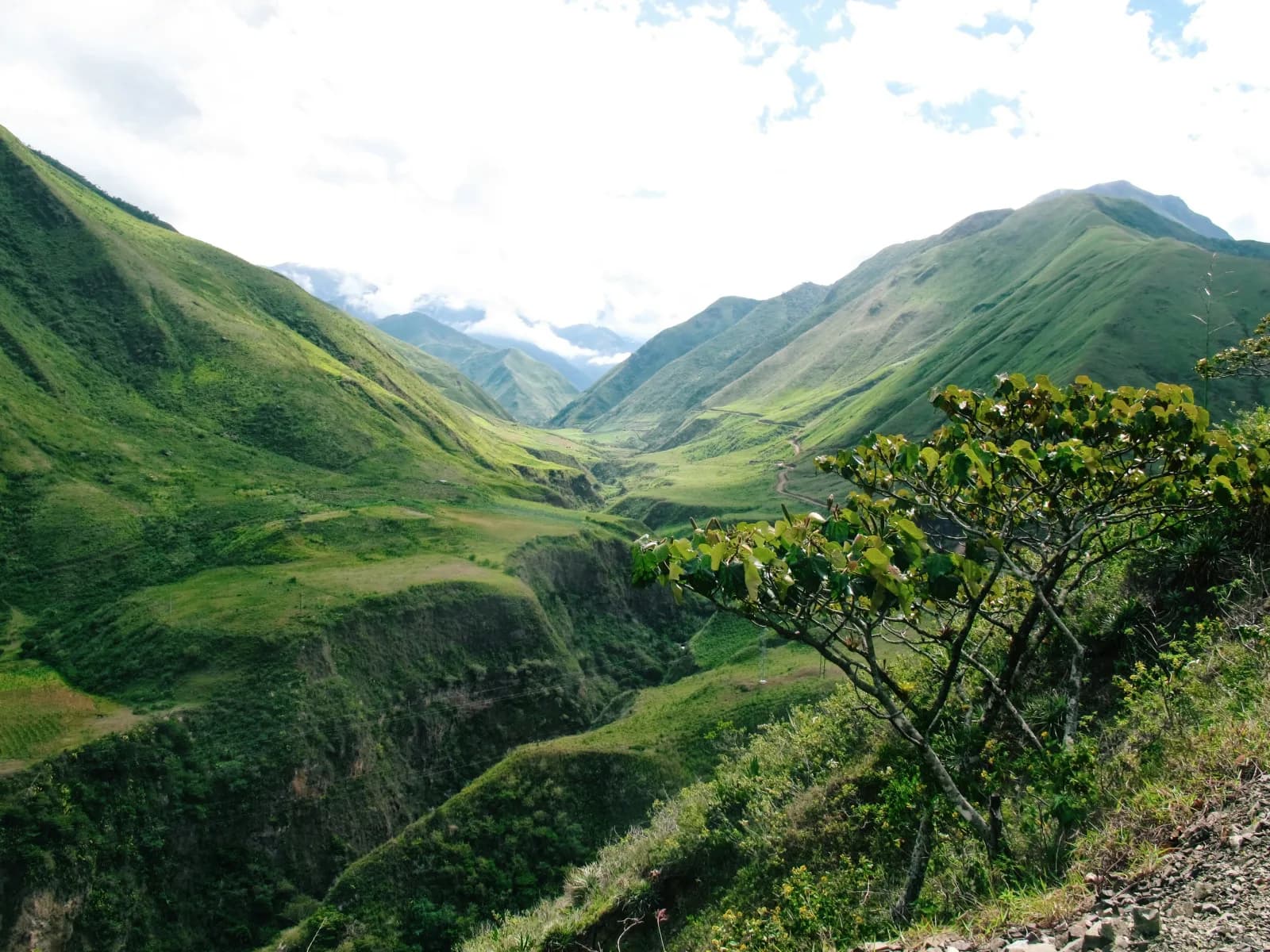
Ecuador is the size of Colorado but contains the Andes, the Amazon rainforest, the Pacific coast, and the Galapagos Islands. In a single weekend you can go from 12,000-foot mountain passes to cloud forest waterfalls to beach towns. No other WHV country packs this much geographic diversity into such a small, affordable, and traversable area.
Domestic travel is absurdly cheap. Buses go everywhere and cost roughly $1 per hour. Cuenca to the coast is $8 and 4 hours. Quito to the Amazon is $6 and 5 hours. You can explore the entire country on weekends without flying.
The Language Argument
A year in Ecuador is a year of Spanish immersion. Unlike WHV stints in Australia or New Zealand where you arrive speaking the language, Ecuador forces you to grow. Spanish is the fourth most spoken language on Earth and a career asset in virtually every field. A year of immersion is worth more than four years of university language courses.
Spanish schools in Cuenca and Quito charge $6-10/hour for private lessons. Group classes are even cheaper. You can combine working holiday employment with structured language study for less than what a semester of university tuition costs.
The Adventure Argument
Ecuador has some of the best adventure sports in South America at a fraction of the cost:
- Cotopaxi (19,347 feet) -- one of the world's highest active volcanoes, climbable with a guide for $150-250
- White-water rafting in Tena and Banos -- Class III-IV rapids for $30-50/day
- Surfing on the coast -- Montanita, Canoa, and Mompiche have consistent breaks and board rentals for $10/day
- Galapagos day trips from the inhabited islands -- last-minute deals available from Quito or Guayaquil
- Jungle treks into the Amazon from Tena, Puyo, or Coca
- Paragliding over Ibarra and Banos
For an adventure-oriented 20-something, Ecuador delivers more variety per dollar than any comparable destination.
Living Costs on a WHV Budget
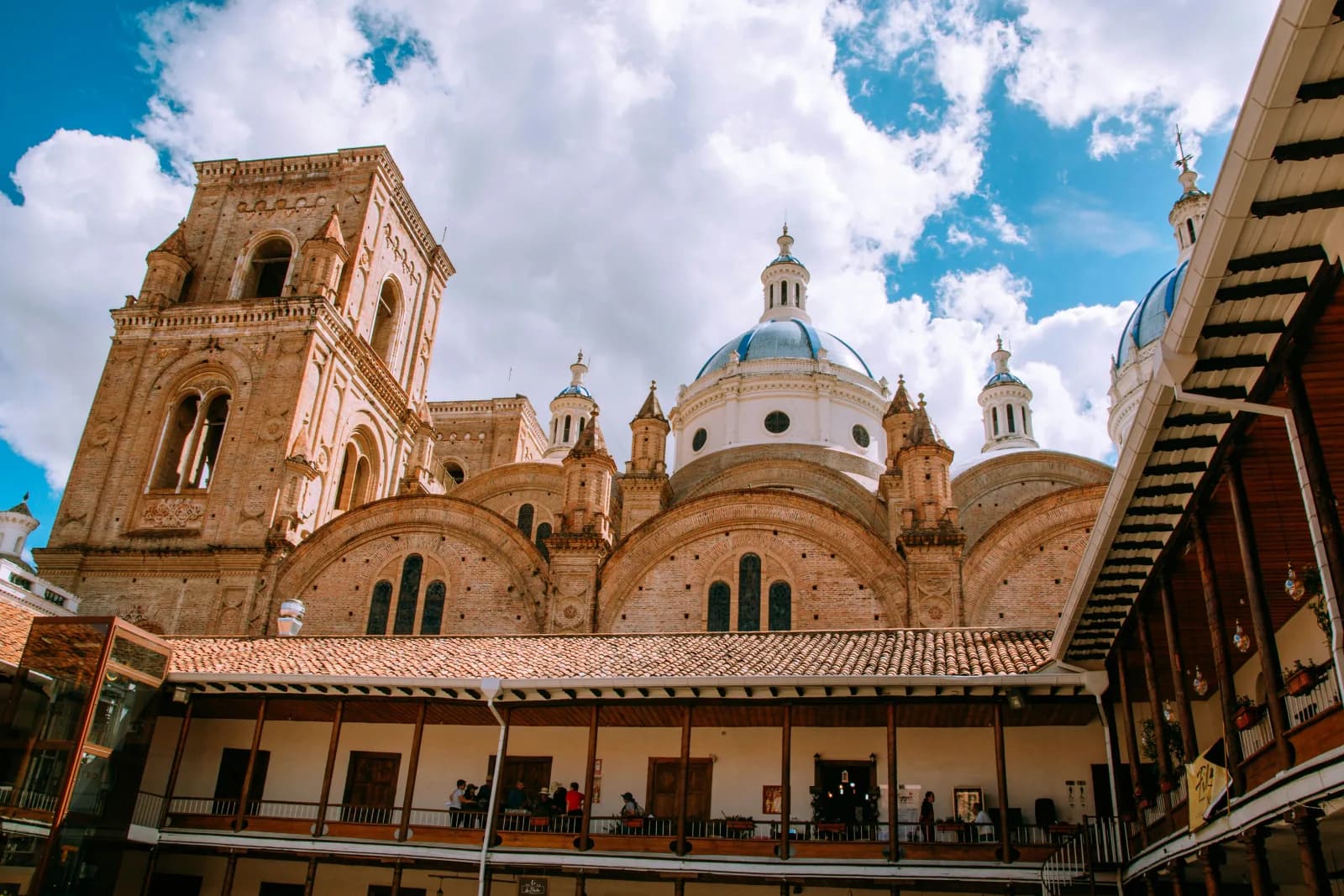
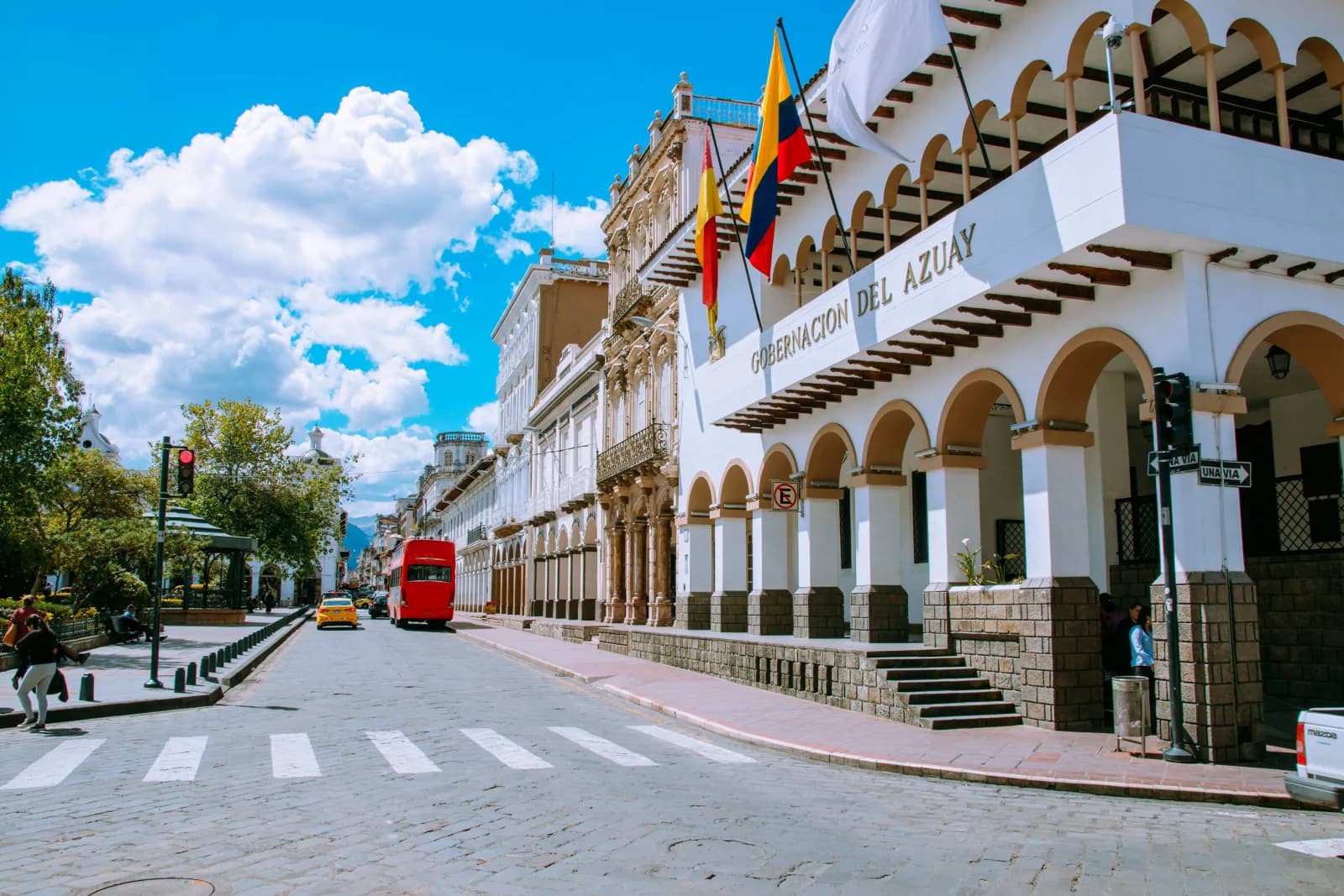
Here's a realistic monthly budget for a Working Holiday Visa holder living in Cuenca, Ecuador's most popular expat city and a UNESCO World Heritage Site:
The Lean Budget: $600/month
| Category | Amount |
|---|---|
| Room in shared apartment | $200 |
| Groceries (mercado shopping) | $100 |
| Almuerzos (10-15/month) | $40 |
| Transport (buses, walking) | $15 |
| Phone (prepaid) | $15 |
| Entertainment | $80 |
| Miscellaneous | $50 |
| Health insurance (pre-paid) | $100 |
| Total | $600 |
This is doable. It's not luxurious, but you're eating well (the mercado produce is excellent), you have a roof over your head, and you have budget for socializing. I live in Cuenca on approximately $750/month myself, and that includes my own apartment rather than a shared one.
The Comfortable Budget: $1,000/month
| Category | Amount |
|---|---|
| Room in shared apartment (nicer area) | $300 |
| Groceries | $150 |
| Dining out (3-4x/week) | $100 |
| Transport (occasional taxis) | $30 |
| Phone + internet | $30 |
| Spanish classes (2x/week) | $100 |
| Weekend trips | $100 |
| Entertainment | $100 |
| Health insurance (pre-paid) | $90 |
| Total | $1,000 |
At $1,000/month, you're living well by any standard. You're taking Spanish classes, traveling on weekends, eating out regularly, and still spending less than you would on rent alone in most Australian cities.
The Coastal Budget: $700-900/month
If you base yourself on the coast (Montanita, Canoa, Puerto Lopez), costs shift:
- Accommodation is similar or slightly cheaper ($150-250 for a room)
- Food is slightly cheaper (fresh seafood everywhere)
- Entertainment revolves around the beach (free)
- But you'll want a fan or AC in the hot months, adding to electricity costs
- Fewer formal employment opportunities compared to Cuenca or Quito
Document Checklist
- Valid passport (6+ months remaining beyond your intended stay)
- Completed Working Holiday Visa application form (obtained from Ecuadorian embassy/consulate)
- Passport-sized photos per embassy specifications
- Criminal background check from your country (apostilled or authenticated)
- Proof of funds ($2,500-5,000 in accessible savings, bank statements from the last 3 months)
- Health insurance certificate covering the full 12-month period, including work-related coverage
- Return flight ticket or proof of funds sufficient to purchase one
- Medical certificate (if required by your specific bilateral agreement)
- Motivation letter (some consulates request a brief statement about your plans in Ecuador)
- Proof of accommodation for your first weeks (hostel booking, Airbnb reservation, or host contact)
Step-by-Step Process
Phase 1: Preparation (2-4 months before departure)
-
Verify your eligibility. Confirm your age (18-30), citizenship (Australia, France, or Hungary), and that you haven't previously held an Ecuador WHV.
-
Contact the Ecuadorian embassy or consulate in your country. Request the Working Holiday Visa application form and confirm current requirements, fees, and available slots. These visas have annual quotas, so apply early in the calendar year if possible.
-
Obtain your criminal background check. In Australia, this is a National Police Check through the Australian Federal Police or an accredited provider. In France, the Casier Judiciaire (Bulletin No. 3). In Hungary, the Erkolcsi Bizonyitvany from the police. Have it apostilled or authenticated as required.
-
Arrange health insurance. Purchase international health insurance that covers the full 12 months, includes coverage for work-related injuries, and meets the Ecuadorian consulate's minimum coverage requirements. Providers like World Nomads, SafetyWing, and Allianz offer plans suitable for working holiday travelers.
-
Prepare your proof of funds. Obtain bank statements from the last 3 months showing the required minimum balance. Some consulates accept a letter from your bank confirming available funds.
-
Book your initial accommodation. A hostel booking or Airbnb for your first 1-2 weeks in Ecuador is sufficient. You'll find longer-term housing after arrival.
Phase 2: Application (4-8 weeks before departure)
-
Submit your application at the Ecuadorian embassy or consulate in person (most consulates require in-person submission for WHV applications).
-
Pay the application fee as specified by the consulate.
-
Attend an interview if required. Some consulates conduct brief interviews to verify your plans and intentions.
-
Wait for processing. Processing times vary by consulate but typically take 2-6 weeks.
-
Receive your visa. Your passport will be returned with the Working Holiday Visa stamp or sticker.
Phase 3: Arrival in Ecuador
-
Enter Ecuador through any international port of entry (Quito, Guayaquil, or Cuenca airports, or land borders).
-
Register with immigration if required by your visa conditions. Some WHV holders must register at the local immigration office within their first 30 days.
-
Obtain a cedula (Ecuador national ID) if your visa duration and conditions require it. For 12-month stays, this is generally required and necessary for formal employment.
-
Open a bank account if you plan to receive wages from an Ecuadorian employer. Your cedula and passport are the primary requirements.
-
Start exploring and working. You have 12 months -- use them.
Phase 4: End of Visa
- Before your 12 months expire, either depart Ecuador or apply for a different visa category if you wish to stay longer. If you qualify for a Professional Visa, Rentista Visa, or another category, begin that application process well before your WHV expires. Overstaying a WHV can complicate future visa applications.
Frequently Asked Questions
Can I apply if I'm 30 but will turn 31 during my stay in Ecuador?
Yes -- in most cases. The age requirement applies at the time of application, not throughout your stay. If you're 30 when you apply and receive your visa, you can stay for the full 12 months even if you turn 31 during that time. Confirm this with the specific Ecuadorian consulate handling your application, as bilateral agreements may have slightly different wording.
Can I transition to a different visa at the end of my 12 months?
Yes, if you qualify for another visa category. The Working Holiday Visa is non-renewable, but it doesn't prevent you from applying for a different visa type. If you fall in love with Ecuador (this happens), you could apply for a Professional Visa (if you have a degree), a Digital Nomad Visa, or another category before your WHV expires. Start the application process at least 2-3 months before your WHV expiration to ensure continuity of legal status.
Is there a quota, and how competitive is it?
Each bilateral agreement specifies an annual quota of available visas. Ecuador's WHV program is not well-known, so demand is currently low relative to the available slots. This is not like Australia's UK WHV program where slots fill within minutes. You're unlikely to be turned away for quota reasons, but applying early in the year is still advisable.
Can I visit the Galapagos on this visa?
Yes. Your Working Holiday Visa grants you legal residency in mainland Ecuador, and legal residents can visit the Galapagos Islands. You'll still need to pay the Galapagos National Park entrance fee ($100 for foreign nationals) and the Transit Control Card ($20), same as any visitor. You cannot work in the Galapagos on a WHV -- employment in the Galapagos is restricted to residents of the islands under special provisions.
What if I get sick or injured while working?
Your mandatory health insurance should cover medical expenses. Ecuador also has affordable out-of-pocket healthcare -- a doctor visit costs $30-60, and an ER visit at a private hospital costs far less than what you'd pay in Australia, France, or Hungary. If you're formally employed by an Ecuadorian company, your employer should enroll you in IESS (the social security system), which provides additional healthcare coverage. Keep your insurance documents accessible at all times.
What's Next
The Ecuador Working Holiday Visa is one of the least-known WHV programs in the world, and that's precisely what makes it interesting. Low cost of living, extraordinary geography, full work rights, and almost zero competition for visa slots. If you're Australian, French, or Hungarian and under 30, this is a year of your life you could spend surfing Pacific breaks, learning Spanish in the Andes, and living on $600-1,000 a month.
Contact the Ecuadorian embassy in your country to start the application process, or start with the visa intake if you want help planning the document logistics of your year in Ecuador.
Related Guides: