
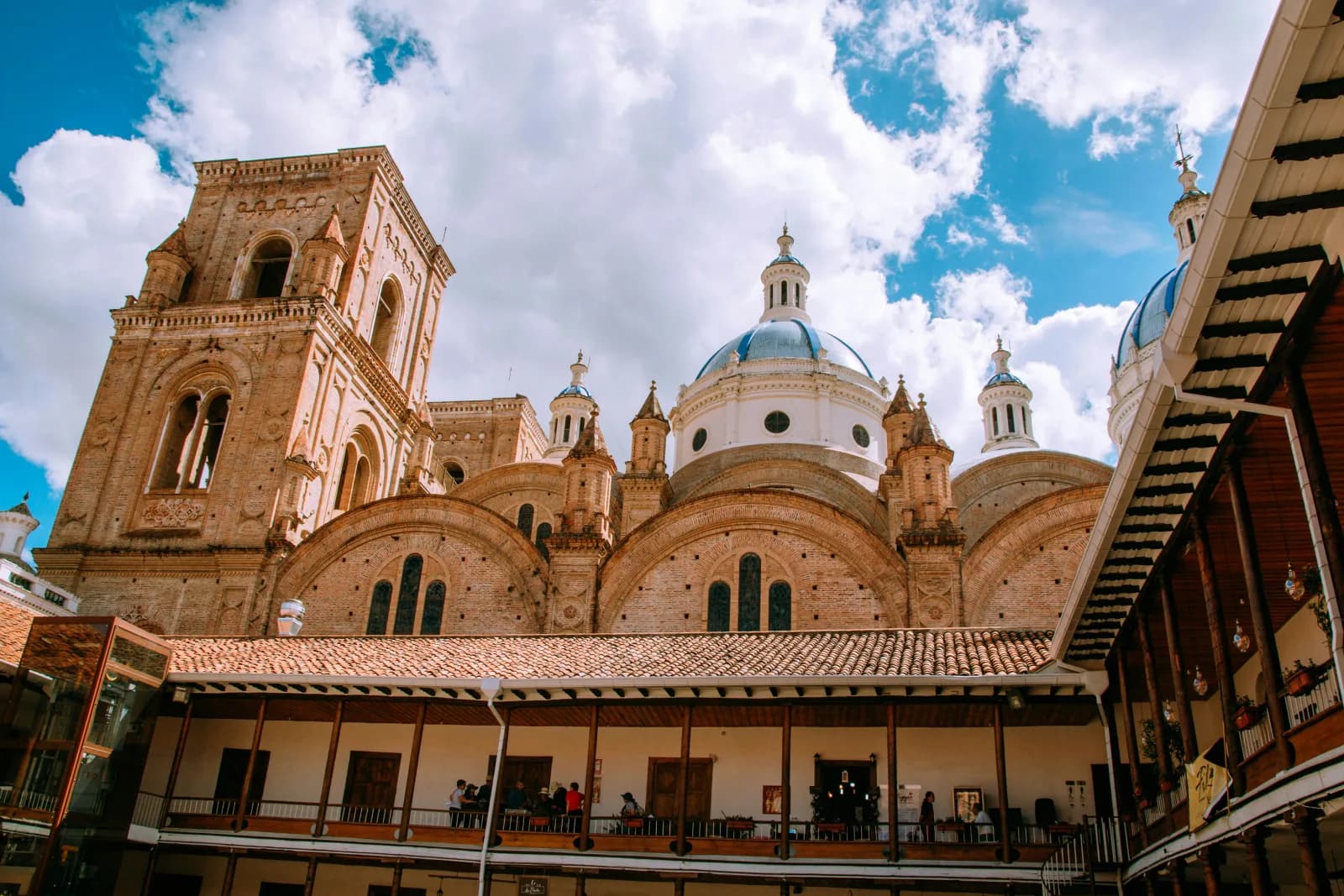
I've been a permanent resident of Ecuador since 2023, and citizenship is on my radar. Not because I need it — my residency lets me live and work here indefinitely — but because after three-plus years of building a life in Cuenca, the idea of formalizing that commitment appeals to me. An Ecuadorian passport would simplify travel across South America without the hassle of border stamps and tourist visa limits, and there's something meaningful about full legal belonging in the country you've chosen as home.
If you're considering the same path, here's what the process actually looks like in 2026 — from eligibility requirements to the Spanish test to the final naturalization decision. I've walked dozens of clients through the residency stages that lead here, and I'll share what the law says alongside what the experience is actually like on the ground.
Current-rule note: The official Gob.ec naturalization procedure currently describes standard applicants as holding permanent residence and being domiciled in Ecuador regularly for at least three years when they apply. Older guides describe the three-year period differently. Use the current Cancillería/Gob.ec procedure and your case-specific records to confirm eligibility before relying on a fixed timeline.
Who's Eligible and When
Ecuador's naturalization process is governed by the Ley Orgánica de Movilidad Humana and the current administrative procedure published through Gob.ec. The standard application requires permanent resident status, regular and continuous residence, proof of lawful means of life, Spanish, general knowledge of Ecuador, an interview, and other documents listed by the authority.
The current Gob.ec procedure describes the three-year regular-residence requirement in connection with permanent residence. You may see older articles saying that temporary-residence time automatically counts from the first visa. Do not assume that interpretation applies to your case; confirm the qualifying dates and status history with Cancillería before planning an application.
There's an important exception under Article 73 for anyone married to or in a legally recognized common-law union (unión de hecho) with an Ecuadorian citizen. In that case, the residency requirement drops to two years from the date the marriage was celebrated or the union was registered, provided your domicile is in Ecuador. The processing timeline for spousal naturalization is also shorter — the law caps the administrative procedure at 90 days from submission, and the government fees are significantly lower (more on that in the costs section below).
The official procedure also limits absences during the relevant residence period. It states that applicants may be absent for up to 180 days per year during the first three years counted from the issuance of the permanent residence visa; exceeding the limit can interrupt regular and continuous residence. Frequent travelers should keep a complete travel history and confirm how the rule applies before filing.
The Process, Step by Step
Naturalization isn't one dramatic event — it's a series of bureaucratic steps spread over several months. Think of it less as a ceremony and more as a patient paper chase with a test at the end.
The first stage is confirming eligibility and assembling your documents. You'll need your valid passport and Ecuador cédula, police clearances from both Ecuador and your home country (apostilled), proof of address in Ecuador such as utility bills or a lease, and evidence of lawful income or financial means. If you haven't already dealt with apostilles during your initial visa application, I've written a detailed guide to apostille requirements that covers the process for US, UK, Canadian, and other documents. The document-gathering phase is where most applicants lose time — start pulling records at least two months before you plan to submit.
Once your documents are assembled, you file your application at the Cancillería — Ecuador's Ministry of Foreign Affairs. There are offices in Quito, Guayaquil, and Cuenca. The Cancillería reviews your file for completeness and schedules you for the language and civics evaluations.
The Spanish Test
The Spanish evaluation tests whether you can communicate at a functional conversational level. The Cancillería doesn't formally peg it to CEFR levels, but based on what applicants consistently report, the difficulty lands roughly at A2 to low B1 — conversational, not academic. You'll be asked to hold a conversation in Spanish, read a short passage, and write basic sentences. If you can chat with your neighbor about weekend plans or describe your daily life in Ecuador without switching to English, you're likely in good shape.
If Spanish still feels shaky after years of relying on English-speaking social circles, Cuenca has abundant affordable Spanish schools where a few months of focused study will get you where you need to be. I cover the broader question of Spanish proficiency at different stages of the visa and residency process in a separate post, so I won't duplicate that here — but the short version is that citizenship is where it actually matters.
The Civics Test
The knowledge evaluation covers Ecuadorian history, geography, the Constitution, government structure, national symbols, and cultural traditions. It's a written, multiple-choice format — approximately 20 questions — and you need a passing score of around 90 percent. That sounds intimidating, but the Cancillería makes study materials available and the question pool is finite. If you've lived here for three years, you've absorbed more of this than you realize. You know the flag, the provinces you've visited, the basics of how municipal government works. The focused study is learning the historical dates, the names of independence heroes like Sucre and Bolívar in their Ecuadorian context, and the structure of the 2008 Constitution — the kind of material that rewards a few weeks of deliberate review, not years of preparation. Applicants aged 65 and older are exempt from the written knowledge test, though they must still demonstrate Spanish reading and writing ability.
After both evaluations, you attend an in-person interview with Cancillería officials who assess your integration into Ecuadorian life and your motivation for seeking citizenship. Then you wait. The authority’s processing time can vary with the completeness of the file, appointment availability, requests for clarification, and the procedure in force; do not plan around a fixed three-to-six-month decision window. If approved, you receive your Carta de Naturalización, register as an Ecuadorian citizen, and can then follow the current procedure for an Ecuadorian passport.
What Citizenship Gets You
The most tangible benefit is the Ecuadorian passport. According to the Henley Passport Index, it currently provides visa-free or visa-on-arrival access to approximately 95 destinations worldwide — including all of South America, most of Central America, and a number of Caribbean, Asian, and African nations. It's not a top-tier travel document by global standards, but for anyone living in South America, it eliminates the border bureaucracy that comes with traveling on a foreign passport through the region. Ecuador's Andean Community membership and MERCOSUR associate status mean simplified movement across the continent — you can cross into Colombia, Peru, or Chile with your cédula alone.
Beyond the passport, citizenship confers full political rights. You can vote in elections and referendums, and you can run for political office. A note on voting, since this confuses people: under Ecuador's Constitution (Article 62), voting is mandatory for citizens aged 18 to 65 who reside in Ecuador, with a fine of roughly $47 for non-participation. However, for Ecuadorian citizens living abroad, voting is optional — you may register to vote in presidential and National Assembly elections, but there is no penalty if you choose not to. Citizens over 65 also vote optionally regardless of where they live. So if you naturalize and then spend significant time outside Ecuador, you won't face fines for missing an election.
Citizenship changes your legal status: a citizen does not maintain that status through a residency-visa renewal, and citizenship may provide political and nationality rights that permanent residence does not. Employment, business, healthcare, social-security, and travel rights still operate under the current Constitution, statutes, and agency rules. Citizenship is not immunity from criminal or other legal consequences, so do not treat a passport as a guarantee against every enforcement action.
Ecuador allows dual citizenship without restriction. The United States also allows it, as do most Western nations including Canada, the UK, and Australia. You won't be forced to renounce your original nationality. That said, citizenship laws vary by country, and if you hold a passport from somewhere other than the US, confirm the rules with your home country's consulate before proceeding. Don't take legal advice about another country's nationality law from an Ecuador visa blog — including this one.
Citizenship vs. Permanent Residency — Do You Even Need It?
This is the honest question most guides skip. Permanent residency already gives you the right to live and work in Ecuador indefinitely. You can own property, run a business, access IESS healthcare, and travel freely in and out of the country. You renew it every five years, which is a minor bureaucratic errand — not a stressful requalification.
What citizenship adds is the passport and political rights, together with a different nationality status. For most American expats, the practical difference in daily life may be limited. The Ecuadorian passport can be useful for regional travel, but its benefits and obligations should be compared with the rights attached to your existing nationality.
Where citizenship makes genuine sense is if you plan to live in Ecuador permanently, if you want to participate in the political process of the country you call home, or if simplified South American travel matters to your lifestyle. It's also a form of diversification — a second passport from a stable country in a different hemisphere, with no global military entanglements, has a quiet logic as part of a broader personal strategy.
I don't push citizenship on clients. I do think it's worth considering once you meet the current eligibility framework and are sure you want the obligations and benefits of citizenship, rather than treating it as an automatic reward for holding a visa.
Realistic Costs and Timeline
The government fees for naturalization through the standard path are $50 for the application and $350 for issuance upon approval — $400 total, as published by the Cancillería on gob.ec. For those naturalizing through marriage to an Ecuadorian citizen, the fees are significantly lower: $50 application and $100 issuance, or $150 total. Applicants aged 65 and older receive a 50 percent reduction, and persons with qualifying disabilities may be exempt entirely. These fees are set by ministerial agreement and can change — check the Cancillería portal for the most current schedule before budgeting.
Beyond government fees, expect to spend on apostilled and translated documents. The exact amount depends on how many documents need processing and your country of origin, but budgeting $200 to $400 for translations and apostilles is realistic for most US applicants. If you need Spanish classes to prepare for the language evaluation, a few months of group classes in Cuenca runs $200 to $400. That puts the realistic total for naturalization at roughly $800 to $1,200, depending on your document situation and Spanish level.
If you're starting from scratch with no visa at all, your initial residency visa adds $320 in government fees ($50 application plus $270 grant) — see our Professional Visa page or visa comparison tool for the full breakdown of that stage.
The overall timeline is case-specific. You may first need temporary residence, then permanent residence, then the regular-residence period required by the current naturalization procedure, followed by document review, exams, interview, and a decision. Do not plan on a fixed three-and-a-half- to four-year path from your first visa without confirming how Cancillería will count your residence.
Questions I Hear Most
How long do you actually have to live in Ecuador to become a citizen? The current Gob.ec procedure describes standard applicants as holding permanent residence and having at least three years of regular residence at the time of application. Because the treatment of prior temporary residence and absences is fact-specific, confirm the count with Cancillería before applying. Marriage, family connection, and other routes can have different rules.
Does Ecuador allow dual citizenship with the United States? Yes, on both sides. Ecuador places no restrictions on holding dual nationality, and the United States does not require you to renounce your US citizenship when naturalizing elsewhere. You'll hold both passports and can use whichever is more convenient for a given trip.
How hard is the Spanish test for Ecuador citizenship? It's conversational — roughly A2 to low B1 based on what applicants report. Think neighborhood small talk and describing your daily routine, not university-level essay writing. If you've lived in Ecuador for three years and made any consistent effort to learn Spanish, you're likely prepared. If not, a few months of dedicated classes will close the gap.
What's the real difference between permanent residency and citizenship? Day to day, the difference may be limited. Permanent residency can allow you to live in Ecuador subject to its conditions, while citizenship adds a national passport and political rights. The two statuses have different rules and obligations; confirm the current consequences before choosing a naturalization path.
Start Your Path to Citizenship
The path to citizenship begins with the right visa. If you're not sure which category fits your situation — Professional, Pensioner, Investor, or something else — take the eligibility quiz or compare visa options side by side. When you're ready to talk through your specific case, start the intake for an intake form. No obligation — just honest answers about your options.
Wondering about your US tax obligations while building residency toward citizenship? FileAbroad is now available for straightforward expat returns. And if you're looking for community as you settle into life here, CuencaExpat.com is worth bookmarking.
Official procedure: Obtención de la nacionalidad ecuatoriana por carta de naturalización on Gob.ec